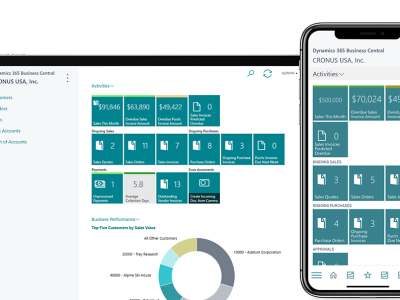
The D365 Transportation Management System is a powerful module within Microsoft Dynamics 365 Supply Chain Management. it allows companies to manage their logistics, coordinate with carriers, and oversee the movement of raw materials and finished goods globally.
Unlike a standalone shipping tool, it lives inside your ERP, meaning it talks directly to your Sales, Purchasing, Warehouse, and Finance departments in real-time.
Core Pillars of the System
D365 TMS focuses on four major areas of the logistics lifecycle:
1. Rating and Routing
This is the “shopping” phase. The system evaluates different transport carriers based on:
- Price: Who is the cheapest for this lane?
- Speed: Who can get it there by Tuesday?
- Constraints: Which carrier has refrigerated trucks or lift-gate capabilities?
2. Load Building & Planning
Instead of shipping ten small boxes, TMS helps you consolidate them into one “Load.”
- Volume/Weight Optimization: It calculates how to pack a container or trailer to maximize space.
- Multi-stop Routes: It plans the most logical sequence of drops to save fuel and time.
3. Freight Execution
Once the plan is set, the system handles the “paperwork”:
- Appointment Scheduling: Coordinating dock times with the warehouse.
- Documentation: Generating Bills of Lading (BOL), packing slips, and shipping labels automatically.
4. Freight Reconciliation (The “Money” Part)
This is where TMS saves the most money. It performs Freight Bill Auditing:
- It matches the carrier’s invoice against the original quoted rate.
- If there is a discrepancy (e.g., the carrier overcharged by $50), the system flags it for approval before Finance pays the bill.
Key Features of D365 Transportation Management System
1. Shipment Planning & Optimization
D365 TMS intelligently groups orders into shipments based on:
- Delivery dates
- Weight and volume
- Route and destination
- Cost optimization rules
This ensures lower freight costs and better asset utilization.
2. Carrier Management
- Maintain multiple carrier contracts
- Define rates, accessorial charges, and service levels
- Automate carrier selection using business rules
3. Rate Shopping & Cost Calculation
The system compares carrier rates in real time and selects the most cost-effective option—without compromising delivery timelines.
4. Multi-Modal Transportation Support
D365 TMS supports:
- Road (FTL, LTL)
- Rail
- Air freight
- Ocean freight
This flexibility is critical for global and multi-location enterprises.
5. Real-Time Shipment Visibility
- Track shipments across the supply chain
- Monitor delays and exceptions
- Proactively inform customers and stakeholders
6. Freight Billing & Settlement
- Automates freight invoice matching
- Reduces billing errors
- Improves financial accuracy and compliance
7. Analytics & Reporting
Using embedded analytics and Power BI integration, businesses gain insights into:
- Transportation spend
- Carrier performance
- On-time delivery rates
- Cost per shipment
Benefits of Using D365 Transportation Management System
Reduced Transportation Costs
- Optimized routing
- Better carrier rate utilization
- Fewer manual errors
Improved Delivery Performance
- On-time and in-full (OTIF) deliveries
- Proactive exception management
End-to-End Visibility
- Real-time tracking across inbound and outbound logistics
Scalability
- Supports growing shipment volumes and global operations
Seamless ERP Integration
- Native integration with inventory, warehousing, and finance
D365 TMS vs Traditional Transportation Management Systems
| Feature | Traditional TMS | D365 TMS |
|---|---|---|
| Deployment | On-premise | Cloud-based |
| Integration | Limited | Native ERP integration |
| Scalability | Costly | Highly scalable |
| Visibility | Partial | End-to-end |
| Automation | Low | High |
Industries That Benefit Most from D365 TMS
Manufacturing
- Raw material inbound logistics
- Finished goods distribution
- Multi-plant transportation coordination
Retail & E-commerce
- Faster last-mile delivery
- Order consolidation
- Carrier performance tracking
Distribution & Wholesale
- High shipment volumes
- Cost-sensitive freight operations
Automotive & Heavy Engineering
- Multi-modal transport
- Complex routing and scheduling
Integration Capabilities of D365 Transportation Management System
D365 TMS integrates seamlessly with:
- Warehouse Management Systems (WMS)
- Inventory Management
- Procurement and Purchasing
- Finance & Accounting
- Power BI for analytics
- Third-party carrier systems via APIs
This ensures zero data silos and a unified supply chain view.
Security and Compliance
Being part of the Dynamics 365 ecosystem, D365 TMS offers:
- Enterprise-grade security
- Role-based access control
- Compliance with global data protection standards
Cloud Advantage of D365 TMS
As a cloud-native solution, D365 TMS provides:
- Automatic updates
- High availability
- Disaster recovery
- Lower IT infrastructure costs
Why Choose D365 Transportation Management System?
If your business is looking to:
- Control logistics costs
- Improve delivery reliability
- Gain real-time shipment visibility
- Scale transportation operations
Then D365 Transportation Management System is a future-ready choice.
It’s not just about moving goods—it’s about moving smarter, faster, and more profitably.